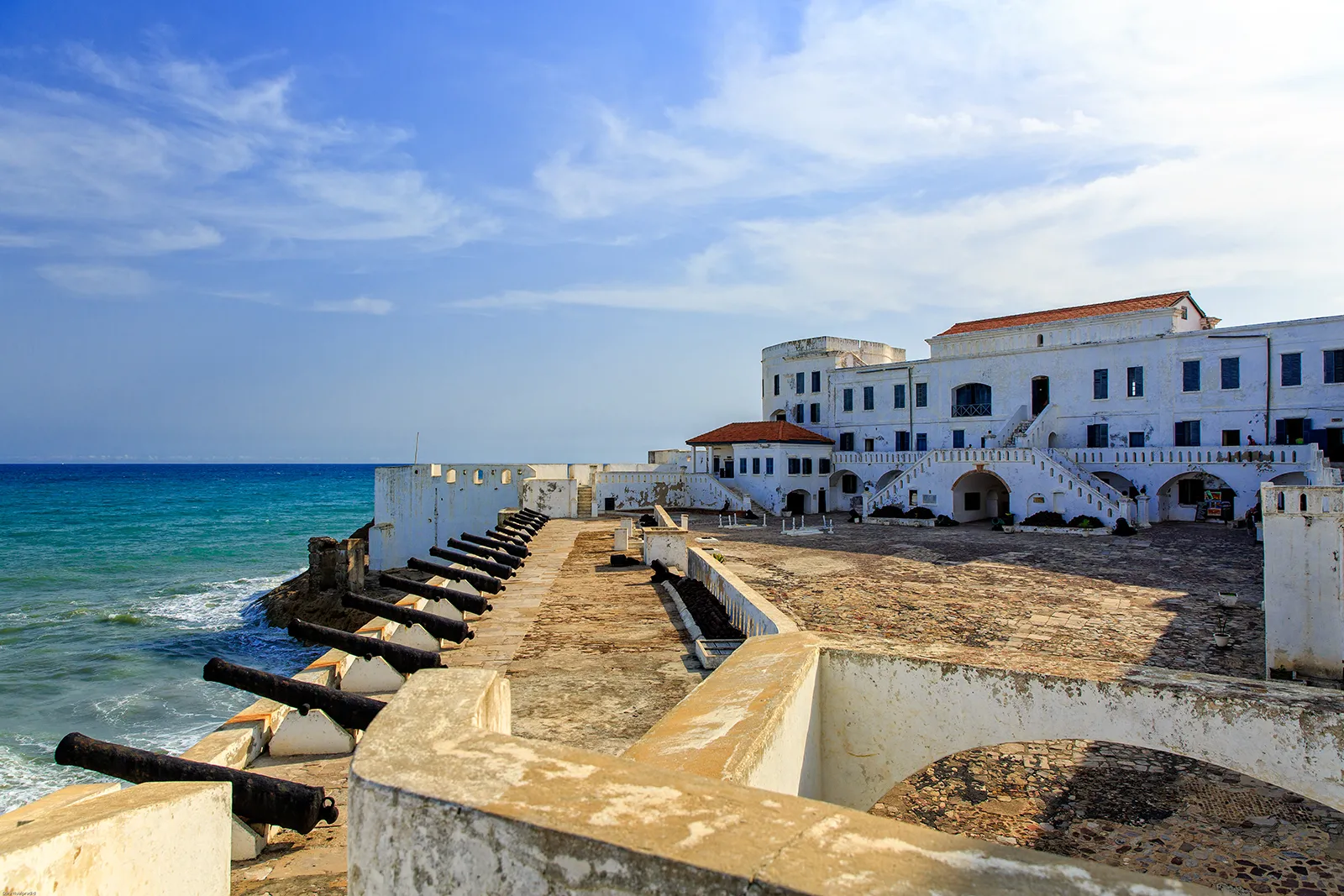
Cape Coast Castle is one of Ghana’s most significant historical sites, standing as a solemn reminder of the transatlantic slave trade. Visiting this UNESCO World Heritage Site offers a profound journey into history, culture, and resilience.
Cape Coast Castle is one of the most visited historical landmarks in Ghana, offering a window into the nation’s turbulent past. Originally built by the Portuguese in the 16th century and later taken over by the British, the castle played a central role in the transatlantic slave trade. Enslaved Africans were held in the castle’s dark dungeons before being shipped across the Atlantic, making it a powerful symbol of human suffering and resilience.
Visitors today can take guided tours that walk through the dungeon cells, the Great Hall, and the governor’s quarters. The tours are deeply educational, detailing the castle’s history, the lives of the enslaved, and the operations of European traders. The stories shared by guides give context to the artifacts on display, from chains and shackles to historical documents.
The castle’s location along the Atlantic coast provides stunning views of the ocean, offering a reflective moment amid the emotional weight of its history. Nearby, visitors can explore the Cape Coast Museum, which houses additional exhibits about Ghana’s colonial history and independence movement.
A trip to Cape Coast Castle is more than sightseeing; it is a deeply moving experience that educates visitors about the horrors of the slave trade while celebrating the resilience and cultural heritage of the Ghanaian people. Travelers are encouraged to wear comfortable shoes, respect the solemnity of the site, and allocate at least two hours for a thorough visit.
Cape Coast Castle is also a hub for cultural programs and festivals, allowing visitors to engage with Ghanaian traditions beyond the historical narrative. It is a must-visit for history enthusiasts, students, and anyone seeking to understand the legacy of the transatlantic slave trade in West Africa.